Find the right hiking layers for the forecast
Start with the forecast for your hiking location, then adjust for the route, elevation and effort. The planner turns the conditions ahead into a practical layer-by-layer kit.
Weather conditions
Auto-fills from your location, or set them by hand. Treat the result as a practical starting point, then adjust to your comfort and the latest local forecast.
Your hike
These are yours to set. The forecast can't guess your pace.
Trip details (duration, time, elevation)
Your layering plan
Built from your inputs, with the reasoning shown underneath so you can see what changed.
Extreme cold. Exposed skin can freeze within minutes. Cover all skin.
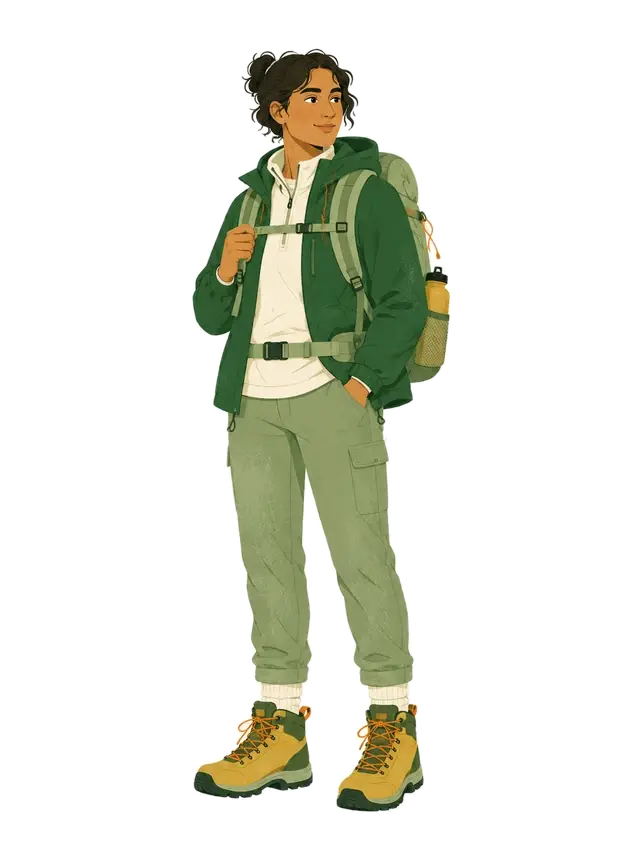
Layer system
Accessories
None needed for these conditions.
Pack list
Why this recommendation
How layering works
Layering lets you regulate temperature on the move. Add and shed pieces instead of betting on one do-it-all jacket. Four roles do the work:
Base
Sits against the skin and moves sweat away. Merino or synthetic, never cotton. Light to heavyweight by cold.
Mid
Traps warmth. A fleece or light grid pullover is the everyday workhorse on cool hikes.
Insulation
Extra dead-air warmth for rest stops and cold summits: a down or synthetic puffy that packs small.
Shell
Your weather barrier. Waterproof-breathable for rain, or a lighter windproof softshell for dry blow.
Want the deep dive?
Fabrics, fit, and how to build a kit that works in every season.
Methodology
We turn your conditions and effort into a "feels like" temperature, then build the layers around it. Because you make heat as you climb, we suggest dressing a little lighter than you would want standing still. Change one setting and you see exactly what shifts.
- Feels like, not just the thermometer. We fold in wind chill (the NWS formula below 50°F, easing off up to 70°F so the number never jumps) and the heat you make while moving.
- Higher means colder. In Summit mode the air cools about 3.5°F per 1,000 feet, with stronger wind on exposed ground.
- Conditions pick the gear. Rain calls a waterproof shell, strong wind a windproof layer, and strong sun adds protection.
- Serious cold gets serious. At freezing we add traction and insulated boots. At a feels like of 0°F or below, we flag frostbite risk and switch to mittens plus face and eye cover.
- Water scales with how long and how hard you are out there.
Sources and further reading: Outforia: Ultimate Layering Guide. Wind chill uses the National Weather Service (NWS) wind chill chart.
This tool is a starting point, not a forecast. Conditions on the trail change fast, so always check a current local forecast and dress for the worst plausible weather.